A Stove Is a Consumable With a Steel Shell Around It
People treat wood stoves as appliances that either work or are broken. They are closer to something with service intervals. The parts that wear are known, they wear on a predictable schedule, and every one of them is cheap while the stove is cold in August and awkward once it is the only heat in the house in January.
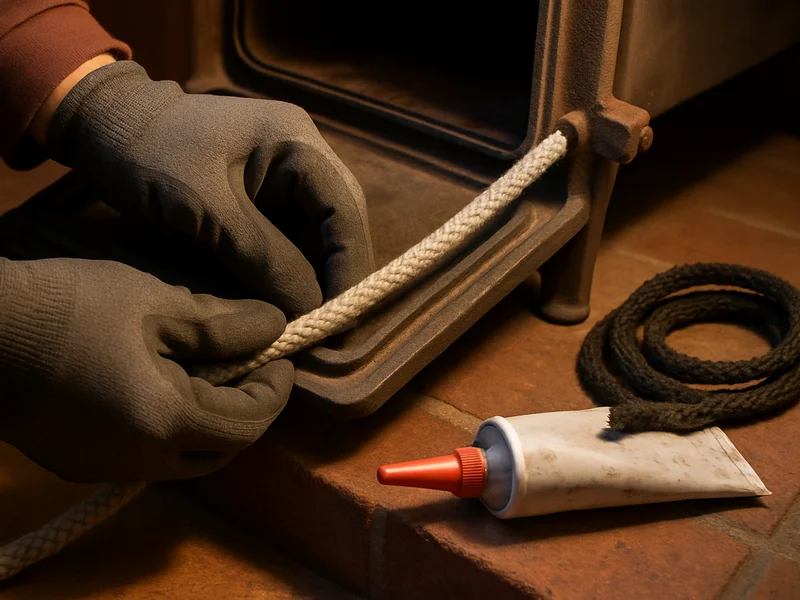
Door and glass gaskets flatten and stop sealing, which lets the fire draw air where it wants instead of where the stove designer intended - so the stove burns hotter than you set it, eats wood and glazes the flue. Baffles and secondary burn tubes sit directly in the hottest gas path and warp or burn through. Firebrick cracks, which is normal, and then falls out, which is not. Glass glazes brown because the gasket behind it has gone or because the wood is wetter than the operator thinks.
What's Included
- Door, glass and ash-pan gaskets measured, replaced and set with proper cement
- Baffle plates, burn tubes and firebrick inspected and replaced as needed
- Air controls and secondary air paths checked for actual movement, not just position
- Inserts pulled forward and the liner connection behind them inspected
- Draft measured and diagnosed before anybody proposes buying parts
Draft Problems Are Usually Not the Stove
The most common service call in this county is some version of "it used to draw and now it doesn't". It is worth knowing that the stove is the least likely culprit. In order of frequency: the flue is dirty or the arrestor mesh is blinded; the wood is wetter than the owner believes; the house is tighter than the stove's air supply assumes and it is competing with a range hood or a dryer; the flue is oversized or too short for the appliance; and only then something inside the stove.
Elevation is a real factor here and it gets ignored. At 6,200 to 6,500 feet there is meaningfully less oxygen per unit volume than the manual's design assumptions, and stoves set up as though they were at sea level run lazier and dirtier. Some of what gets diagnosed as a broken stove in this valley is a stove that is simply being run with the air controls a sea-level manual told the owner to use.
We measure before we sell. If the answer is drier wood and a cracked window in the room, that is what you will hear, and it will cost you the price of the visit rather than the price of a rebuild.
Inserts Get Their Own Paragraph
An insert is a stove in a box inside a masonry hole, which means everything above is true plus the question of what it vents into. Pulling an insert forward is the only way to see the liner connection, and on older installations here that connection is where the problems live: a slip joint that has separated, a positive connector that was never fitted, or a flex liner that stops short of the appliance. None of that is visible from the room and none of it is visible from the roof.
Stove and insert service by town
Stove not drawing right?
Tell us what it does and when. Draft complaints are usually diagnosable before anyone buys a part.
Get a Free Quote