Two Jobs, One Piece of Metal
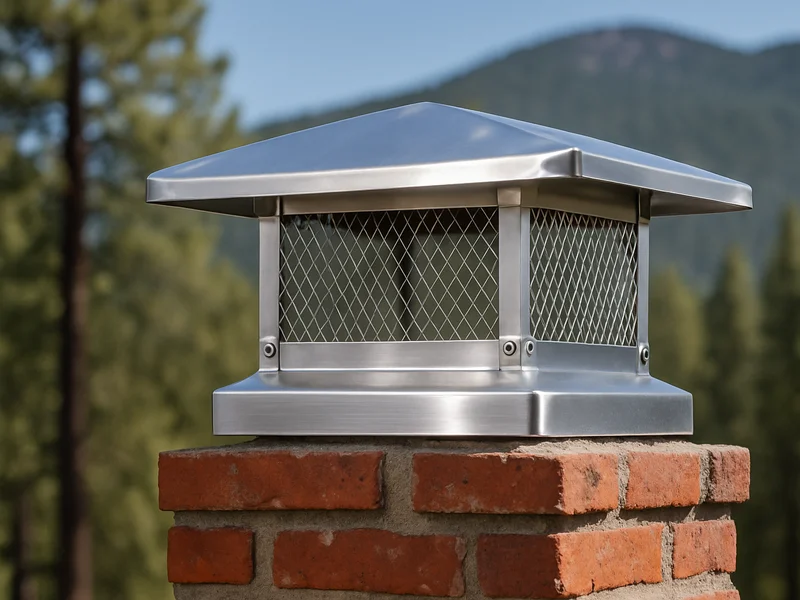
A chimney cap does something obvious and something that has become expensive to ignore. The obvious job is keeping water, snow and animals out of the flue - an open chimney in this forest collects pine needles all summer and rain all monsoon season, and both of them attack the crown and the liner from the inside.
The second job is stopping embers going the other way. Spark arrestor mesh across the cap keeps burning material from leaving your flue and landing on a roof or in the duff. In wildland-urban interface - which is most of where people actually live in La Plata County - that is not a theoretical concern, and the insurance market has stopped treating it as one.
What Changed, and Why It Now Affects the Price of Your Policy
Three things moved at once. Colorado homeowner non-renewals rose 77 percent between 2018 and 2023 and have kept climbing. La Plata County adopted the state's 2025 Wildfire Resiliency Code, setting standards for hardening structures and clearing defensible space. And as of 1 July 2026, Colorado law requires any insurer that uses a wildfire risk model to underwrite, price or decline to renew a policy to disclose the homeowner's risk score in writing each year - and to account for the mitigation work that homeowner has actually done.
Read that last clause carefully, because it is the operative one. The credit attaches to work that has been done and can be shown. A compliant spark arrestor and a sound cap sit on standard mitigation checklists alongside ember-resistant vents and cleared gutters. If yours is missing, rusted through or a universal cap squeezed onto the wrong flue size, there is nothing to submit.
We are not insurance agents and we will not promise you a discount - that is between you and your carrier, and we have no visibility into their model. What we will do is fit the right hardware and hand you the photographs and a written note of exactly what went on, so that when the annual notice arrives you have something better than a memory.
What's Included
- Flue measured and a stainless cap sized to it - not a universal squeeze-fit
- Spark arrestor mesh to the aperture the code specifies, not whatever came in the box
- Crown checked while we are up there, and cracks reported with photographs
- Multi-flue chimneys capped as one assembly where that is the right answer
- Written record of what was fitted, with dated photographs, handed to you
Why Universal Caps Cause Callbacks
The cap most often already on the chimney when we arrive is a friction-fit universal, pressed onto a flue it does not quite match and held by set screws into clay tile. They loosen. Two winters of freeze-thaw and a spring wind and they lift, and the homeowner does not find out until water is running down the firebox or a bird has nested in the smoke chamber. On stone chimneys with oversize crowns they often cannot seat at all and get siliconed in place, which fails faster.
A cap that is measured, sized and mechanically fastened costs more up front and stops being a line item on your calendar. That is the whole argument.
Cap and spark arrestor work by town
Mitigation paperwork
We photograph the cap and mesh and write down what was fitted, so you have something to send at renewal.
Get a Free Quote