Where the Forest Meets the Roofline
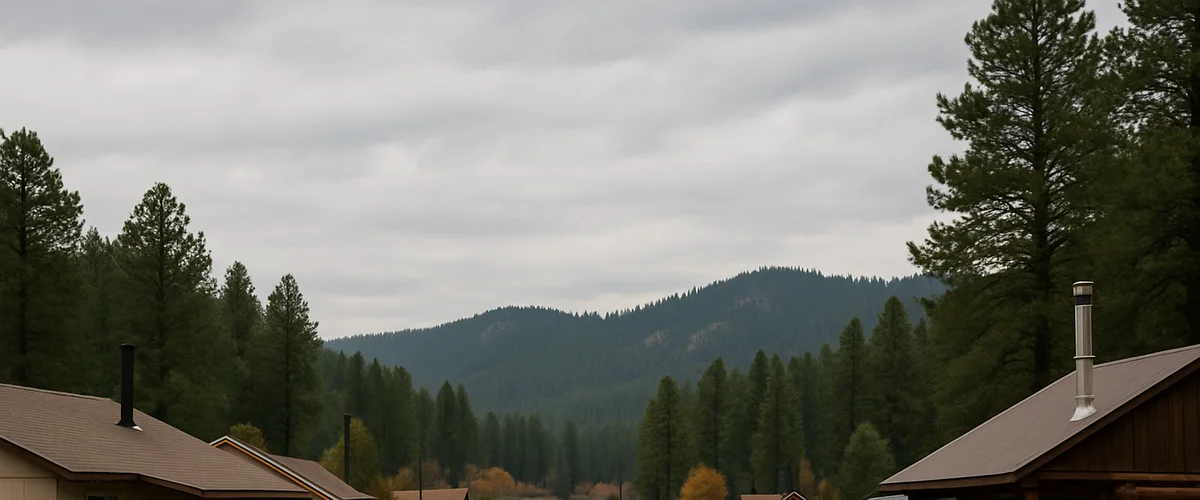
Bayfield and the Pine River valley behind it are the most straightforwardly wooded ground we work. Ranch land on the valley floor, ponderosa and gambel oak climbing the sides, and up toward Vallecito a lot of cabins and second homes sitting directly in the trees. Wood heat is normal here, class-A insulated pipe is more common than masonry, and firewood is stacked against the house rather than bought by the bundle.
Two things follow from that. The flues work harder than they do in town, because these are houses genuinely heated with wood rather than lit for effect. And the wildfire exposure is more acute than anywhere else on our patch - this valley has watched fire come down the ridges before, and everyone here knows it.
Spark Arrestors Are Not a Formality Out Here
An uncapped or badly capped flue in the middle of a pine stand is an ember problem in both directions. Material blowing in fills the flue with needles and duff over a summer; material going out lands on a shake or metal roof, or in the litter around the house. On a town lot that is a nuisance. With trees over the roof it is the thing your neighbours notice.
It is also, since 1 July 2026, the thing your insurer is required to account for. Colorado law now obliges carriers using wildfire models to disclose your risk score and credit completed mitigation, and La Plata County has adopted the state's 2025 Wildfire Resiliency Code. Cap and arrestor work sits on those checklists, and we document it so you have something to submit - see caps and spark arrestors.
Class-A Pipe, and What Actually Fails on It
Most cabins and newer builds up this valley vent through stainless insulated pipe. It is a good system and it fails in specific, findable ways: joints working loose over years of thermal cycling, storm collars and flashing sealant perishing in high-altitude UV, and corrosion on the inner wall where an appliance has been running cool.
The reason we press on annual looks here rather than every-other-year is that class-A that has gone is replaced rather than patched. Catching a section is a manageable bill. Catching a run is not, and the difference between those two outcomes is usually one or two seasons of not looking.
Cabins That Sit Empty
A lot of the property up toward Vallecito is used seasonally, and seasonal use is harder on a chimney than continuous use - cold starts, condensation on every cycle, and months at a time with nobody there to notice a lifted cap or a bird's nest in the smoke chamber. The right habit is a look before the first fire of the season rather than after the first smoky one.
What we do in Bayfield
Cabins and seasonal places
Shoulder-season visits are easiest here. Access is good and there is time to fix what turns up.
Get a Free Quote